International Day of Education – Why we offer Danish lessons at Tactile
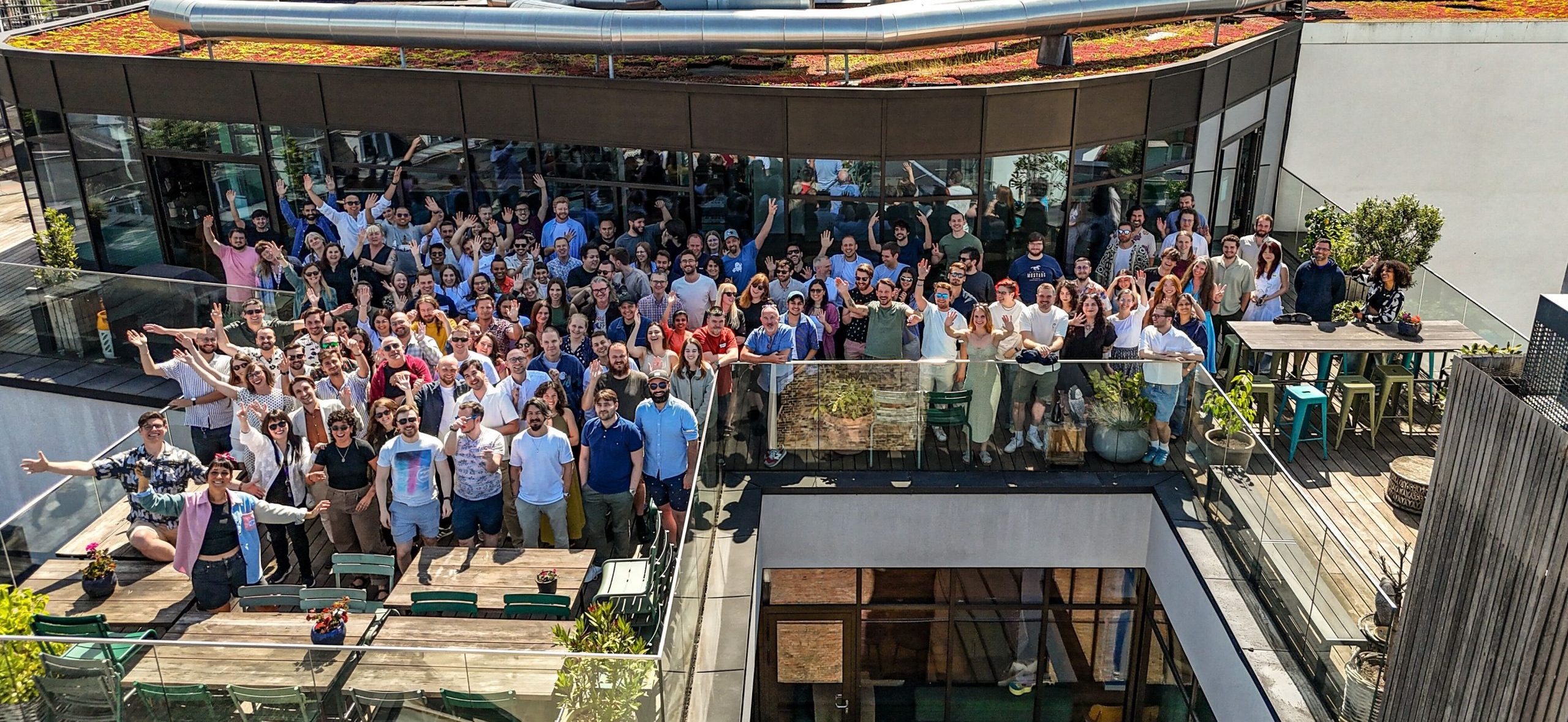
Since 2019, we have been offering free Danish lessons to all Tactilers coming from outside of Denmark. We are proud to have our amazing Danish teacher, Anja, on board for the past 6 years. She has so far taken over 150 Tactilers on the Danish language and culture learning journey!
In honor of the International Day of Education, which is recognized by the UN on the 24th January, we chatted to Anja about why we teach Danish at Tactile and why learning the local language and culture of the country you live in is so important.
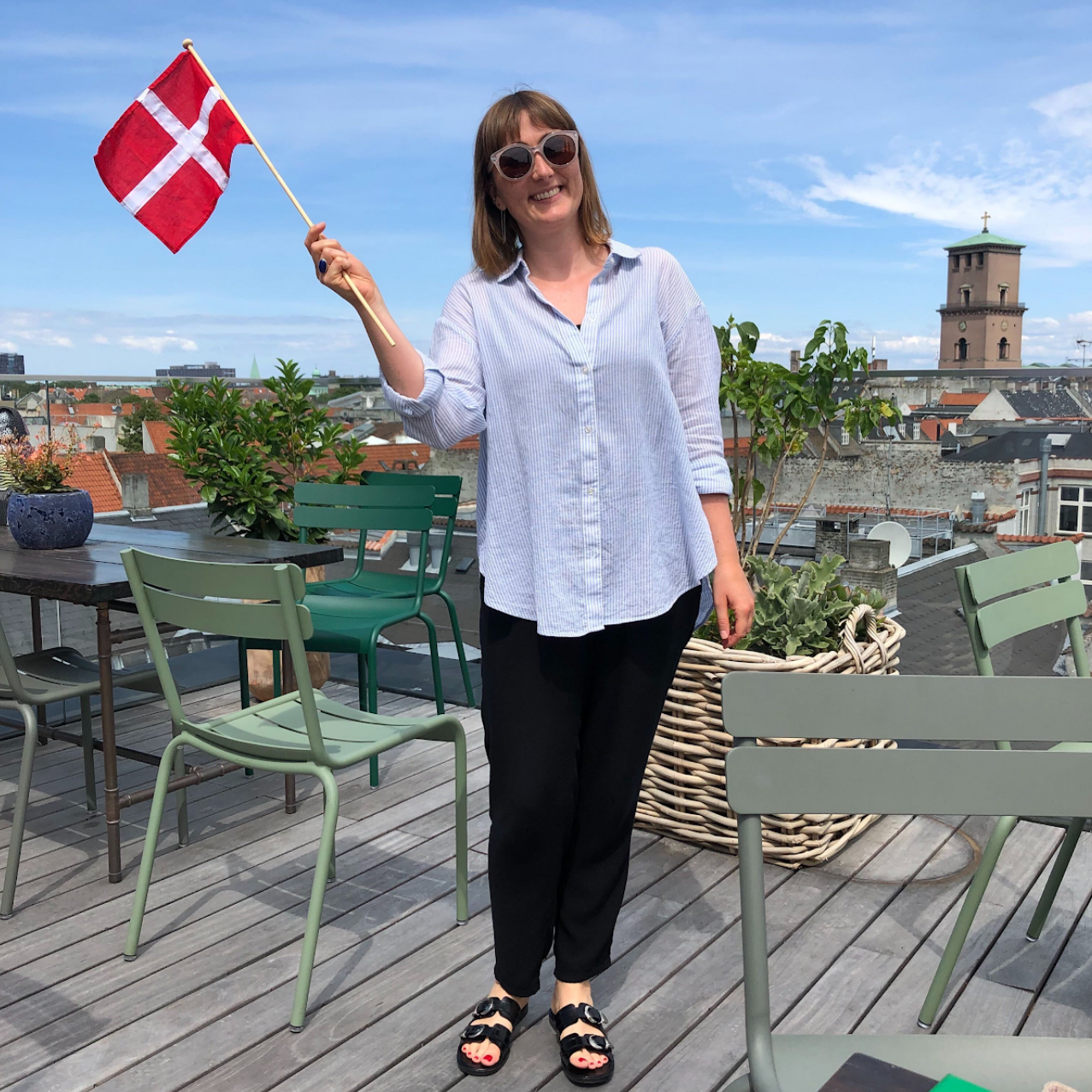
👋🏻 Hi Anja, what led you to a career in education, and why did you pick teaching Danish as a second language?
Anja: From quite early on, I took an interest in languages and communication. Years back, I worked as a volunteer in a language café and that’s where I had my first teaching experiences. It was quite inspiring to meet people from all over the world with different backgrounds and one thing in common – they were all learning Danish. My experiences at the language café made me curious and I wanted to get into language teaching more, so I decided to do my master’s degree in Danish as a Second and Foreign Language. I also started working at a language center at the University of Copenhagen.
Not only have I learned a lot about passing on information in different ways and about people from all over the world, but I have also learned about my own country and language from all the wonderful questions I’ve had from students over the years.
💡 Why do you think learning the local language of the country you live in is so important?
Anja: I believe that in order to understand certain aspects of a culture, you also need to acquire the local language. And luckily, there’s so much more to language learning than just vocabulary and grammar. The learning process sheds a lot of light on to things like common courtesy, politeness, hospitality and how to act in social situations.
You don’t have to be fluent or a grammar enthusiast. A beginner might feel proud when starting to use phrases like “thank you” or “have a nice day”, and it might even put a smile on someone’s face. A more advanced learner might feel accomplishment when finally understanding something on the news or when hearing locals talk and understanding what they’re saying.
💪 Why do we offer Danish lessons at Tactile?
Anja: Learning a language is a long and often rough journey, so it’s important to have proper guidance. It’s also important to celebrate the small steps and wins along the way. We offer classes in-house to support our colleagues that have moved to Denmark to start a new life, knowing that there’s a lot to juggle and get used to.
Our small groups and long courses offer an option to engage with curiosity over time in an environment where there’s always time to be heard and included. Other than that, it’s also an opportunity for people to meet across teams that maybe wouldn’t meet otherwise.
📚 How did you approach setting up a Danish language programme at Tactile?
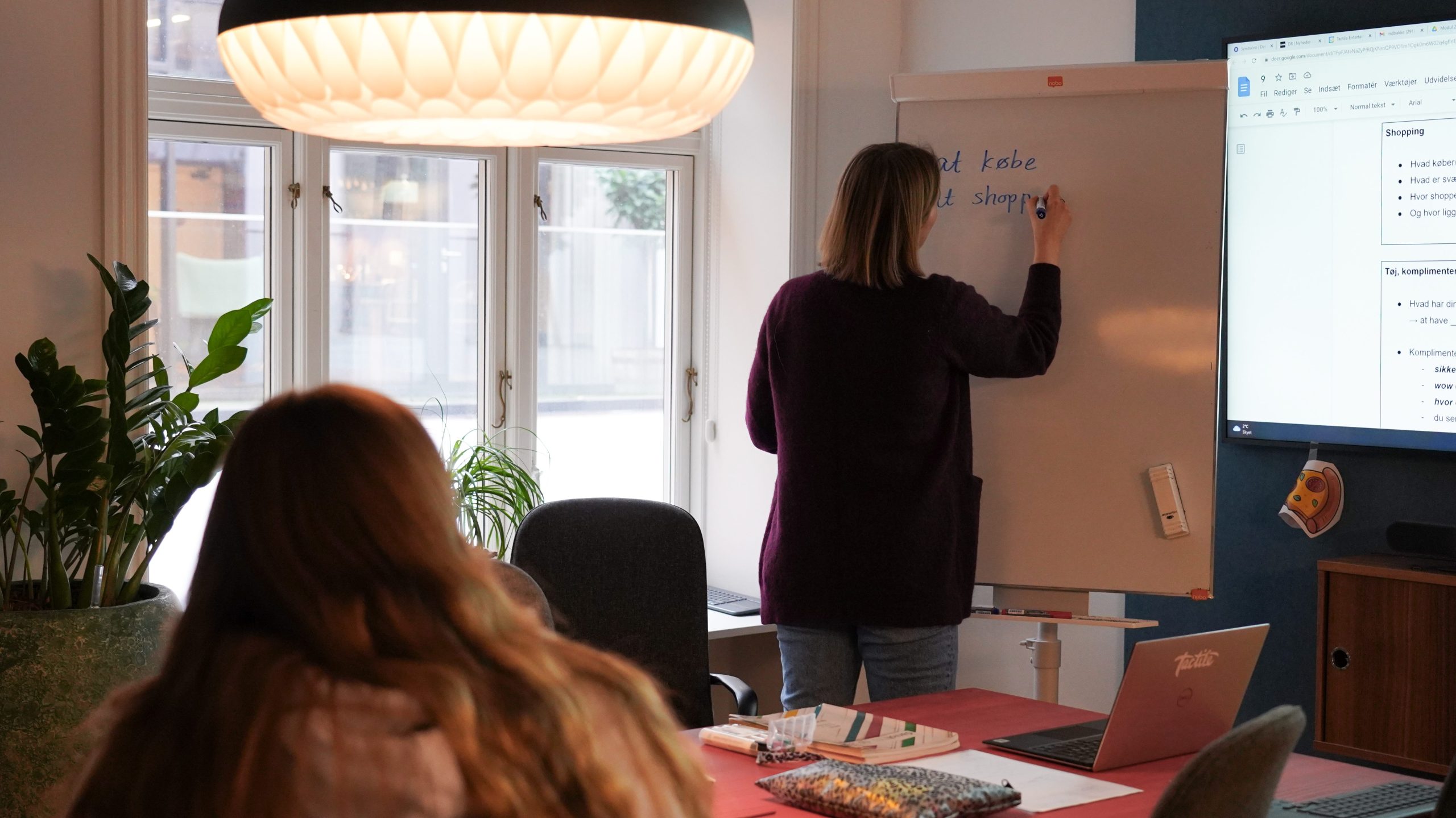
Anja: The first and most basic thing I had to do back in 2019 was a needs analysis. This included sending out questionnaires, talking to people and asking them about what they wanted or needed to learn, what they were curious about and considered to be fun and interesting. The interest was big and in the fall of 2019, we kicked off 7 courses. Later on, in 2021, we started a cooperation with a language school here in Copenhagen which enables us to offer courses similar to module 1 and 2 (the official Danish Language Education Programme). After module 2, we now offer supplementary courses, for instance to train conversation skills or to support people preparing for exams, including the Danish citizenship exam.
👩🏫 How do you adapt your teaching style to different students?
Anja: We start new courses twice a year and it’s the same procedure and the same puzzle every time, but it always adds up. In general, it always includes assessing the level of a student (to be) compared to the time they can invest in the learning process, people’s availability etc. This is to make sure that we have some realistic goals within the frames of what we can offer.
In every single classroom, it’s important to detect the things that capture people’s attention and through that maintain their motivation and drive for learning, no matter the level or the goal.
😎 What are the most useful words or phrases to know as a foreigner in Denmark?
Mange tak / tusind tak (Many thank yous / A thousand thank yous) – Since we don’t have an equivalent to “please”, we hand out quite a lot of thank yous.
God weekend [ˈgoˀ viːˌgεnˀd] (Have a good weekend!) – The Danes are not telling you to go vegan, but just wishing you a very good weekend! And we do value a good work-life balance ⚖️
Skål (Cheers!) – Comes in handy at any party or social event, we need this word in all the languages 🍻
Velbekomme (Bon appetit or you’re welcome) – When you see someone eating, you can wish them ‘may it serve you well / may it come well to you’ 🍽️ Or, you use it to say “you’re welcome”.
Det var så lidt (That was so little / That was nothing / No biggie!) – This is very cultural. Instead of saying you’re welcome, you can use this phrase to underline that it wasn’t any trouble to help at all.
Nå (Well / Oh / So / Really etc.) – Danes use this a lot and in many different situations, for example when you’ve just realized something, or when you meet a cute dog, or when you’re showing interest, or even when you’re making a threat. You could do a whole study on variations of this tiny word 😄
Hvordan går det? (How are you? / How’s it going?) – It is a common misconception that this is just a greeting, but Danes actually see it as a proper question and will gladly answer the question or wait for you to do so.
Hyggelig (Cozy / Pleasant / Homely) – A big part of Danish culture is this feeling of coziness and warmth. Hyggelig is therefore used a lot and to describe anything or any situation that makes you feel this way – cozy, welcome, warm & good! ❤️
Fun fact, the Danish word for ‘scary’ is actually uhyggelig. Basically, anything that is not perceived as cozy, pleasant or homely is straight up scary 😂